

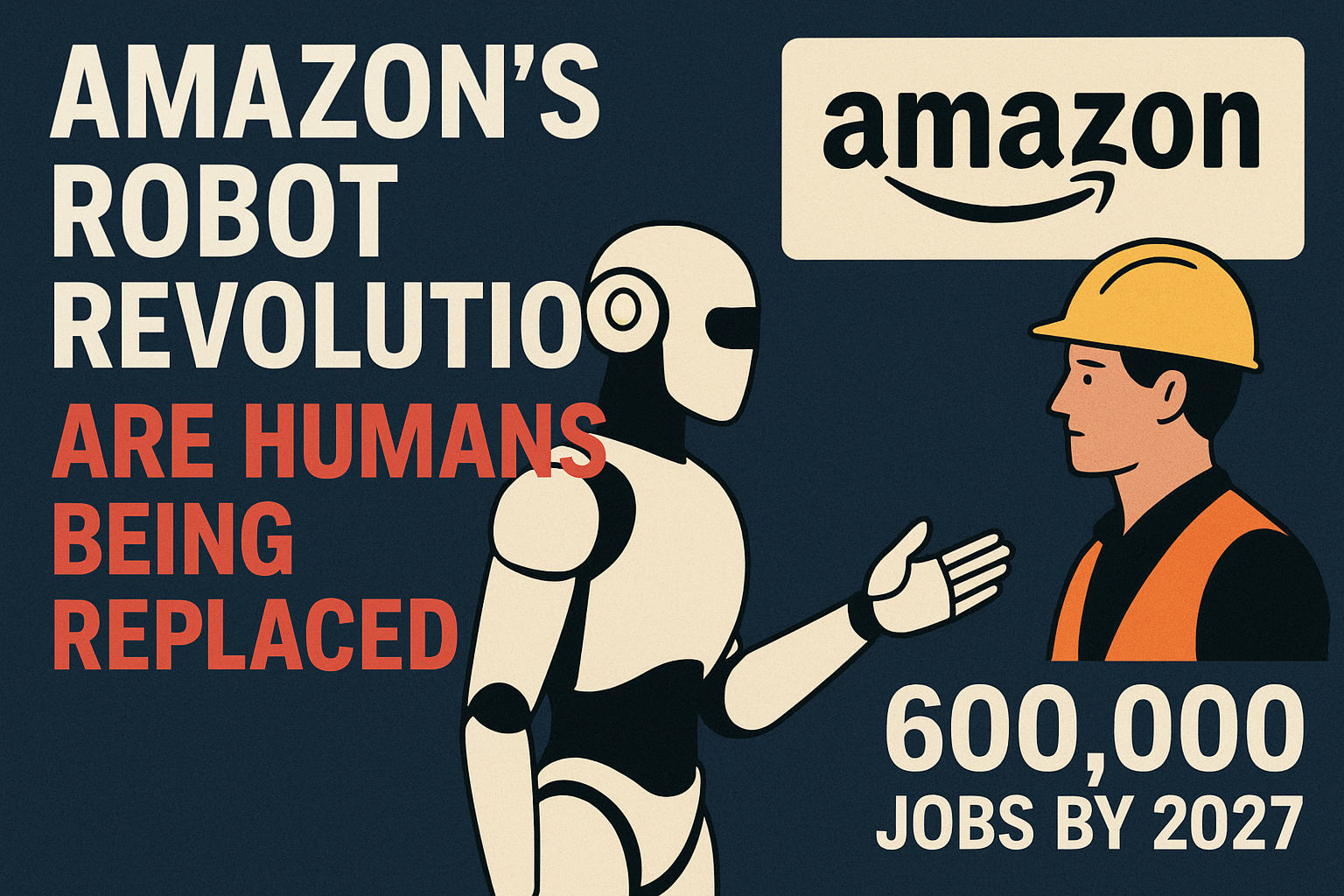
Amazon Layoffs Due to Robots: Is Amazon Replacing Humans with Machines by 2027?
The shocking revelation of potential Amazon layoffs due to robots has sparked debate about the future of employment and automation. Leaked internal documents reportedly show that Amazon plans to replace over 600,000 workers with robots by 2027, signaling a major shift in how the e-commerce giant operates. This massive move toward automation raises crucial questions about job security, innovation, and the human role in an AI-driven economy.
What Are the Reports Saying About Amazon Layoffs Due to Robots?
According to leaked documents and various tech reports, Amazon’s robotics and automation division has outlined a long-term plan to automate up to 75% of its warehouse operations. This strategy could lead to Amazon layoffs due to robots across multiple departments, especially in warehouse and logistics roles.
The company aims to save nearly $12.6 billion in labor costs by increasing automation efficiency.
By 2033, Amazon’s robot integration could reach a level that avoids hiring or replaces 600,000 workers.
The internal memo suggests the use of “co-bots” (collaborative robots) to perform manual tasks like picking, packing, and sorting faster than humans.
While Amazon hasn’t officially confirmed a “layoff plan,” experts believe the transition is already underway.
Why Is Amazon Turning to Robots?
There are several business and operational reasons behind these Amazon layoffs due to robots and automation upgrades:
Cost Efficiency – Human labor remains Amazon’s largest operational expense. Replacing repetitive roles with robots reduces costs per unit.
Scalability – With rising e-commerce demand, automation allows Amazon to scale operations without hiring at the same pace.
Safety & Precision – Robots can perform high-risk or repetitive tasks, improving workplace safety and accuracy.
Technological Innovation – Amazon has been investing heavily in AI, warehouse robotics, and logistics automation since 2012.
Which Jobs Are Affected by Amazon Layoffs Due to Robots?
The leaked documents suggest that Amazon layoffs due to robots will primarily impact low- to mid-skill warehouse positions. These include:
Warehouse associates (picking, packing, moving goods)
Delivery sorting staff
Inventory handlers
Some logistics and maintenance roles
At the same time, new roles in robotics maintenance, AI system management, and data analytics could emerge, creating a shift from manual labor to technical expertise.
Amazon’s Response to the Layoff Reports
Amazon officially denies that the leaked automation documents represent its overall hiring policy. The company maintains that it continues to hire thousands of employees globally and claims that robotics technology is being introduced to assist, not replace, human workers.
However, as seen in similar industries, “assistance” often leads to job reduction once automation reaches efficiency at scale — strengthening the speculation around Amazon layoffs due to robots.
The Broader Impact of Amazon Layoffs Due to Robots
This wave of automation doesn’t just affect Amazon employees — it’s reshaping the entire logistics and e-commerce sector. If Amazon succeeds in automating at this level, other major retailers may follow suit.
The broader implications include:
Job Displacement: Large-scale layoffs could impact regional economies dependent on Amazon warehouses.
Skill Shift: There will be growing demand for robotics engineers, AI technicians, and automation specialists.
Economic Ripple Effect: Communities relying on warehouse employment might face slower growth or economic decline.
Policy Challenges: Governments may need to invest more in reskilling and future-ready workforce programs.
How Workers Can Prepare for the Future
With Amazon layoffs due to robots becoming a global discussion, it’s essential for workers to prepare early:
Upskill or Reskill in automation technology, AI, robotics maintenance, and logistics analytics.
Leverage Amazon training programs if available in your region — the company occasionally offers skill-transition courses.
Explore new opportunities in areas less prone to automation: software, design, management, or customer experience roles.
Automation isn’t the end of employment — it’s the evolution of it. Those who adapt early stand to benefit most.
Conclusion: The Real Meaning Behind Amazon Layoffs Due to Robots
The phrase “Amazon layoffs due to robots” represents more than just one company’s shift — it’s a symbol of an entire industry evolving through automation. By 2027, Amazon may indeed rely on robots for most of its warehouse operations, fundamentally changing how products move from shelves to customers’ doors.
While this brings efficiency, it also challenges society to rethink the relationship between humans, technology, and work. The future isn’t about humans versus robots — it’s about how we collaborate to build smarter, safer, and more sustainable workplaces.